Spent nuclear fuel
70,000 MT across cooling-pool and surface-storage systems.
$75BNuclearSAFE is a technology platform company creating integrated, patent-protected systems for the safe, efficient and environmentally responsible back end of the nuclear fuel cycle.
The U.S. nuclear-waste challenge spans spent nuclear fuel, Hanford tank waste, uranium hexafluoride inventories and Savannah River liquid waste. NuclearSAFE planning estimates place the combined opportunity represented by these selected problem areas at approximately $700 billion.
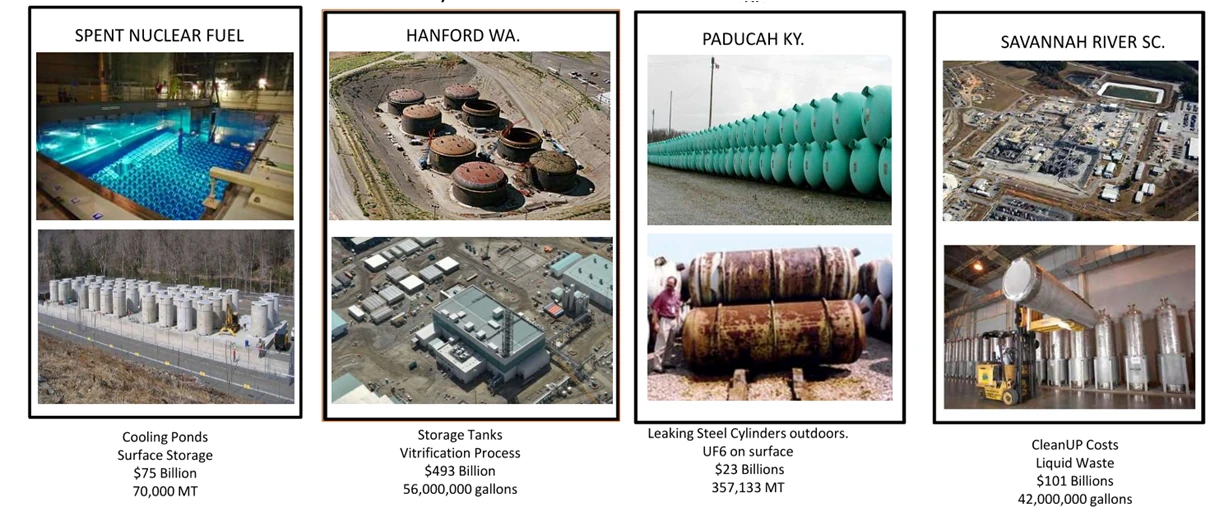
70,000 MT across cooling-pool and surface-storage systems.
$75B56,000,000 gallons in tank-waste and vitrification programs.
$493B357,133 MT of UF₆ represented in surface cylinder inventories.
$23B42,000,000 gallons represented in liquid-waste cleanup operations.
$101BFigures reproduce NuclearSAFE planning estimates shown in the supplied source presentation and should be independently validated before external publication.
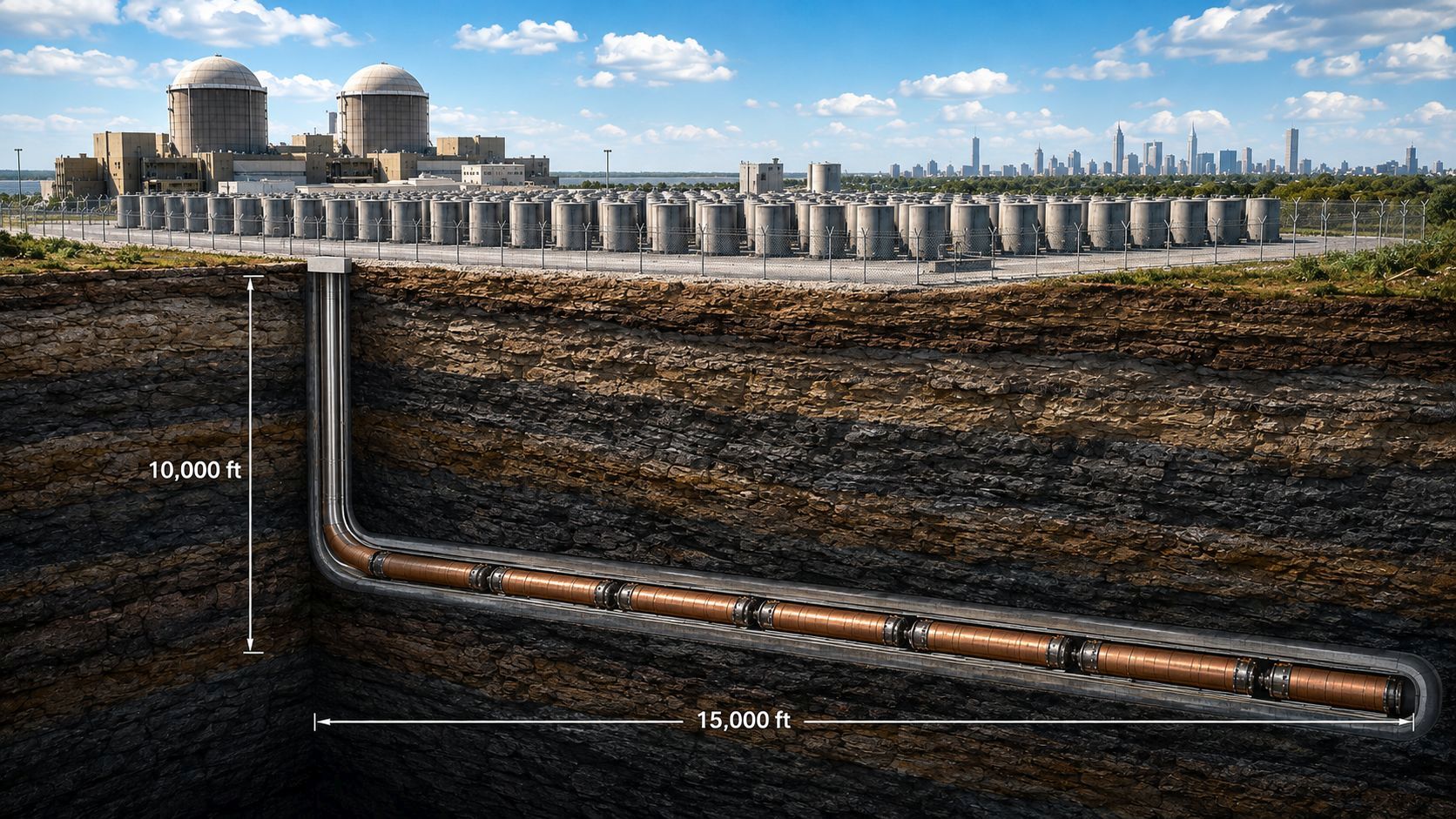
SuperLAT®, CinGOT™ and SuperSILO® form an integrated platform built to address spent nuclear fuel, high-level waste and other difficult radioactive waste forms.
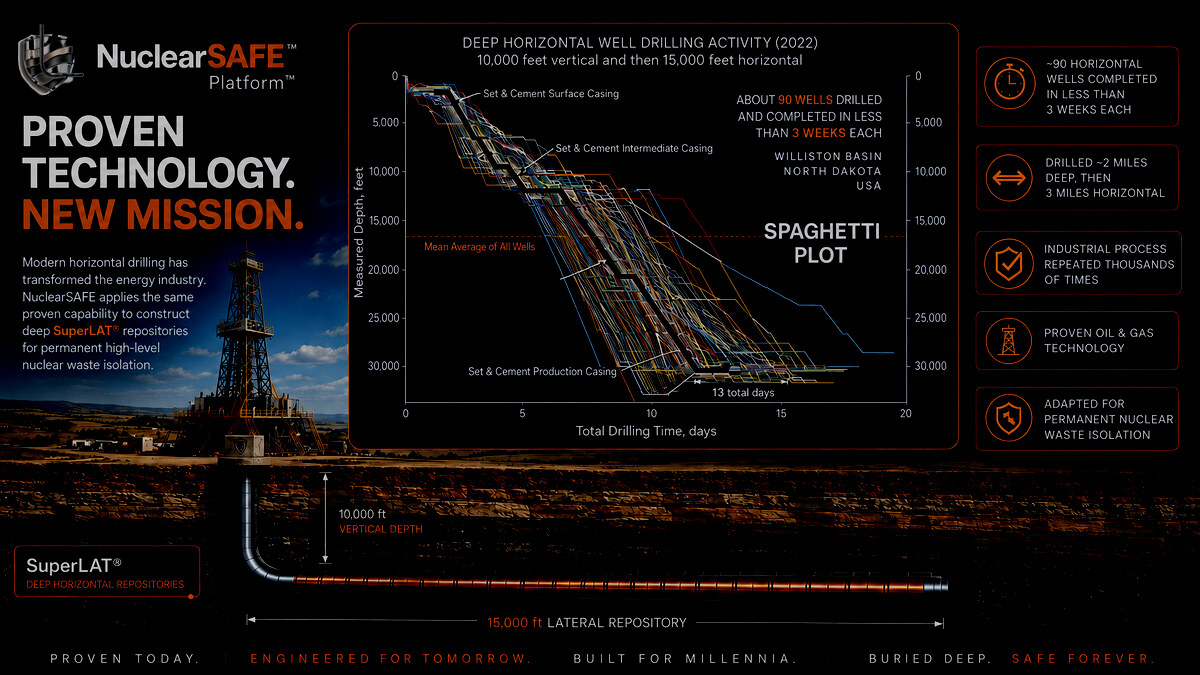
Proven horizontal drilling capability adapted for deep, retrievable and scalable nuclear waste disposal.
Explore SuperLAT →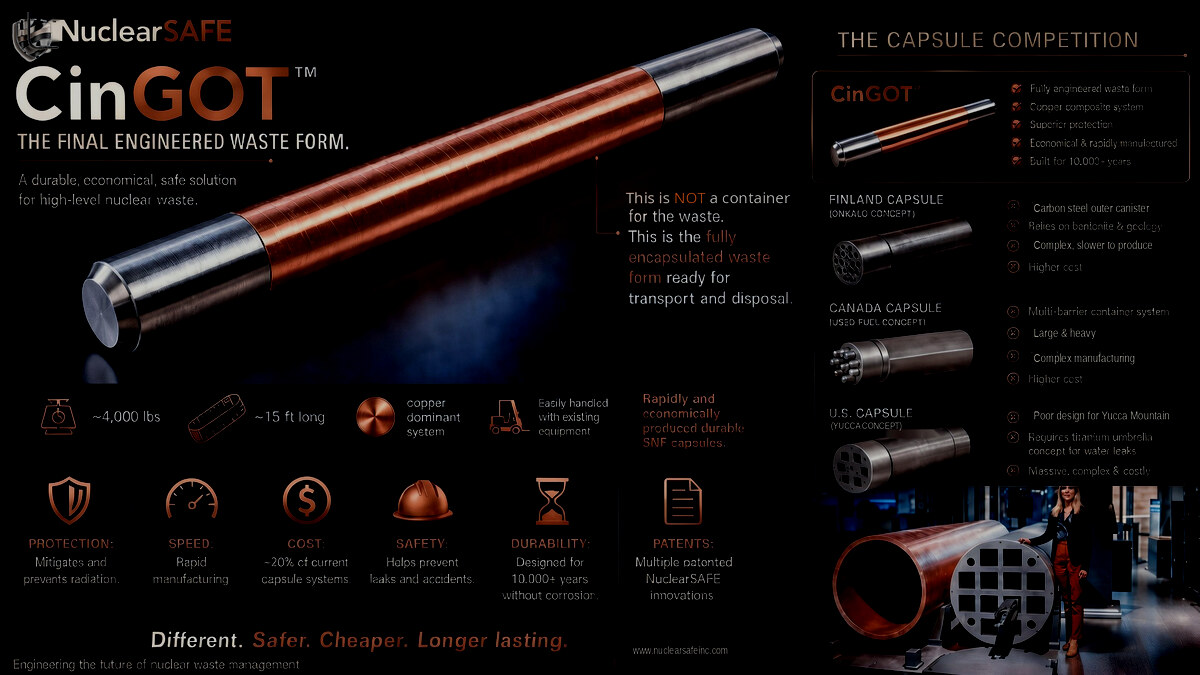
A copper-dominant encapsulation system intended to improve durability, manufacturability and disposal readiness.
Explore CinGOT →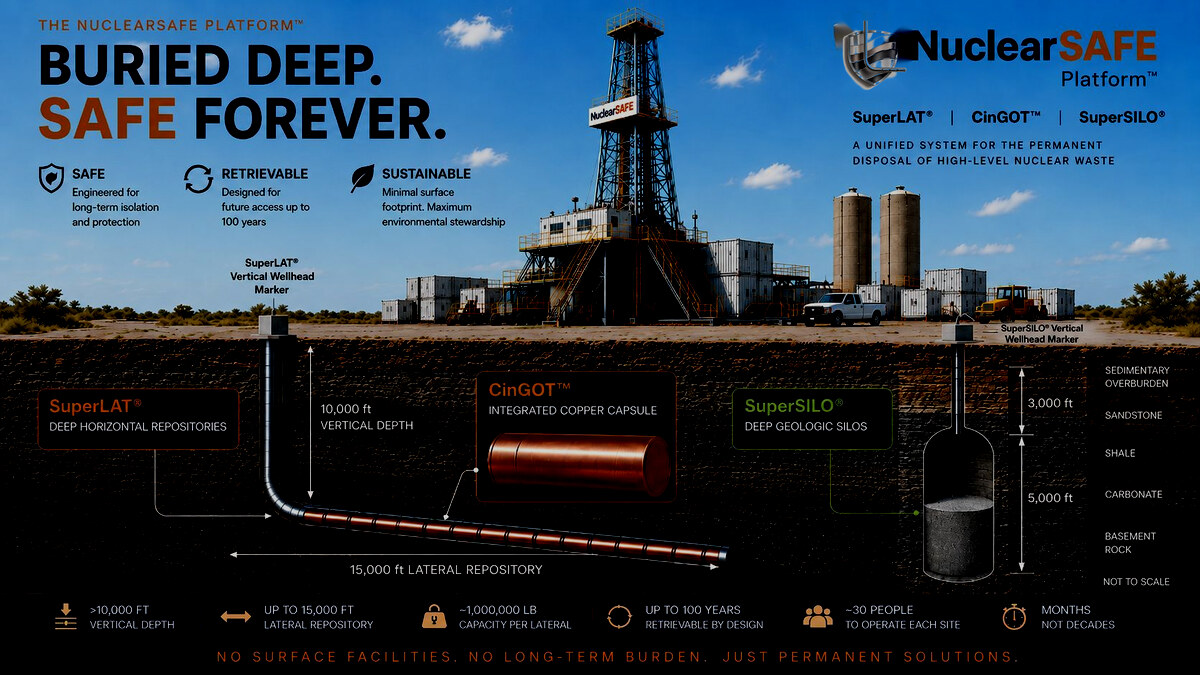
Engineered deep disposal volumes for stabilized liquid, granular and other difficult waste streams.
Explore SuperSILO →NuclearSAFE develops the technologies, systems, IP and engineering architecture that can enable future disposal programs. The company is positioned as a platform innovator—not a conventional mine builder, storage contractor or long-term caretaker.
Waste form, repository, deployment, retrieval, monitoring and closure technologies developed as one ecosystem.
Adapting mature drilling, automation, metallurgy and manufacturing capabilities to nuclear waste challenges.
A broad, non-duplicative IP base that demonstrates sustained engineering innovation.
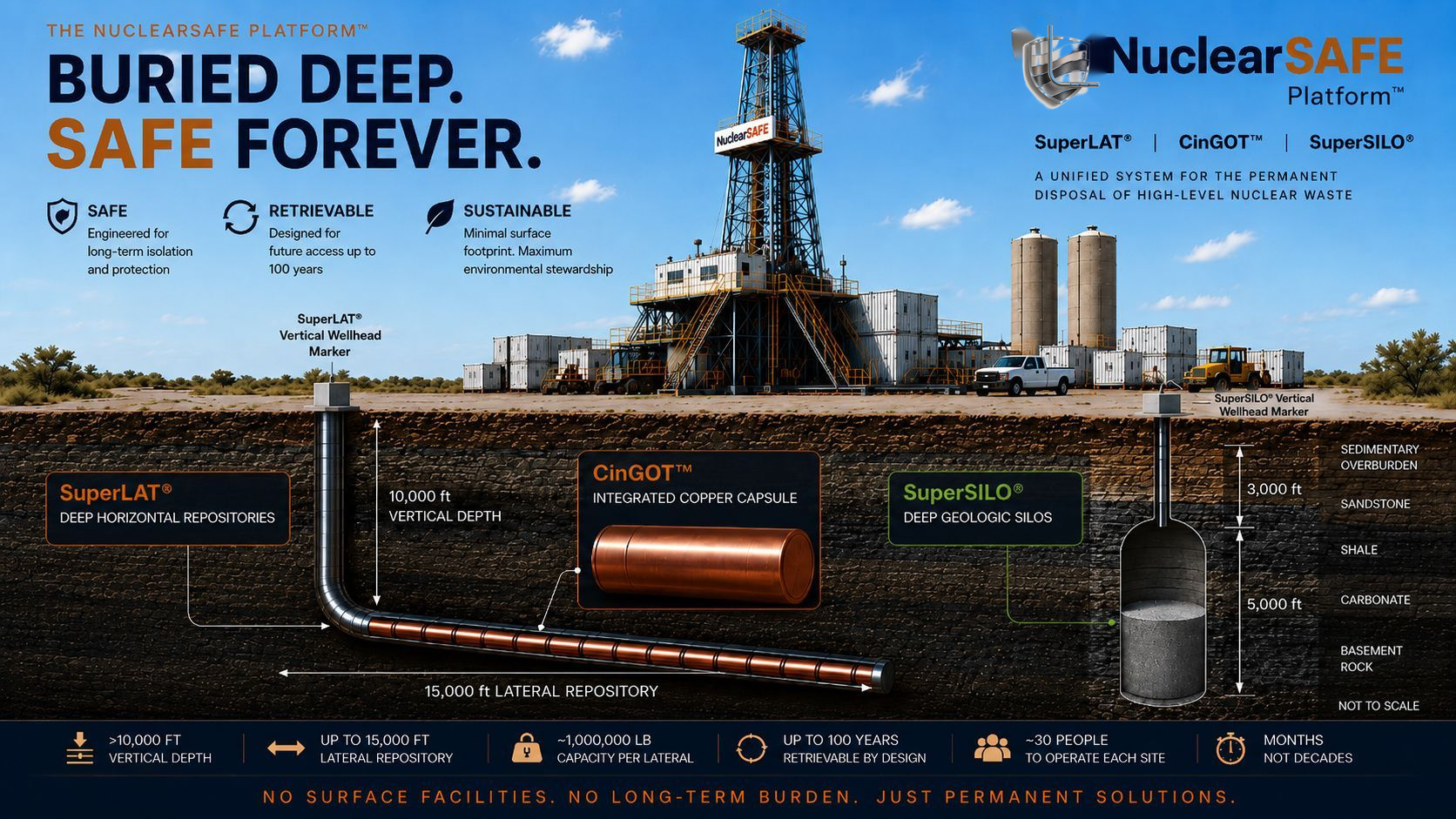
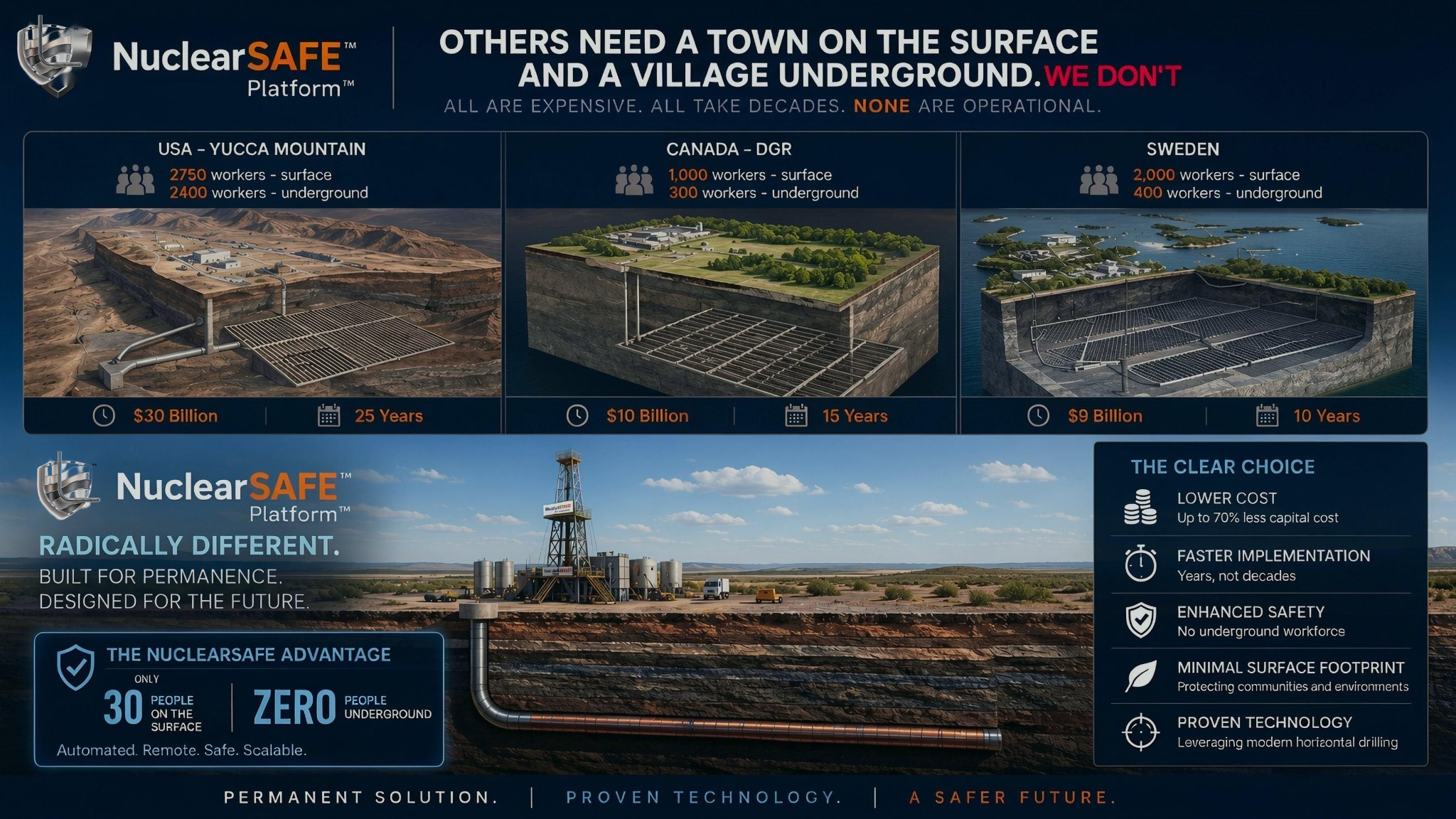
NuclearSAFE advances surface-operated, automated systems intended to reduce underground labor, surface disruption, construction duration and long-term operating burden.
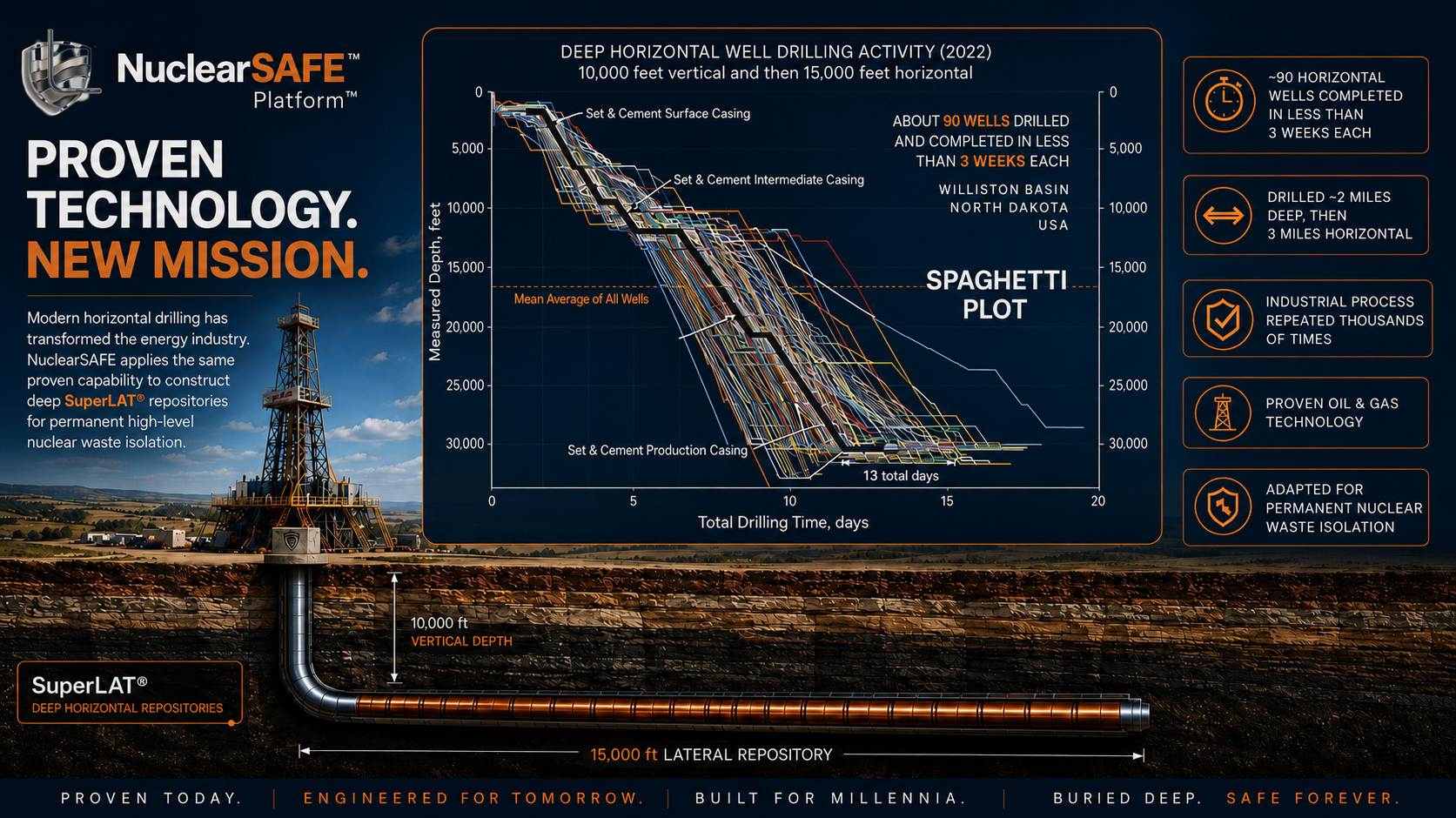
In the last 10 years, SuperLAT-type horizontal drilling systems used across oil and gas operations have drilled more than 250,000 horizontal wells and an estimated 4.5 billion feet of wellbore. This is a powerful industrial-maturity benchmark.
SuperLAT does not ask the nuclear industry to invent deep horizontal drilling. It adapts a mature industrial capability to the specific requirements of nuclear-waste disposal.
NuclearSAFE now separates the investor, government, regulatory, intellectual-property and industrial-technology cases so each audience can go directly to the evidence most relevant to its decision.
Oilfield-scale evidence behind SuperLAT wellbore operations, redundancy and contingency capability.
LicensingRegulatory ReadinessHow the NuclearSAFE platform maps to the performance functions of geologic disposal.
GovernmentU.S. DOEDefined problems, testable solutions and procurement-friendly demonstration pathways.
CapitalInvestor OverviewThe problem, platform, business model, moat and path from demonstration to revenue.
IPPatents & IPPublic nuclear-technology patent families spanning disposal, capsules, retrieval, closure and specialized waste.
NuclearSAFE's secondary portfolio addresses waste conditioning, alternative geologies, transport, retrieval, automated operations, site intelligence, closure and specialized radioactive materials.
U.S. Patent 5,850,614 established the foundational concept of disposing high-level radioactive waste in deep horizontal wellbores.
That invention helped launch a new industry. NuclearSAFE now extends the original insight into an integrated platform spanning advanced capsules, repository construction, automation, retrieval, geologic systems and permanent closure.
Meet the company